
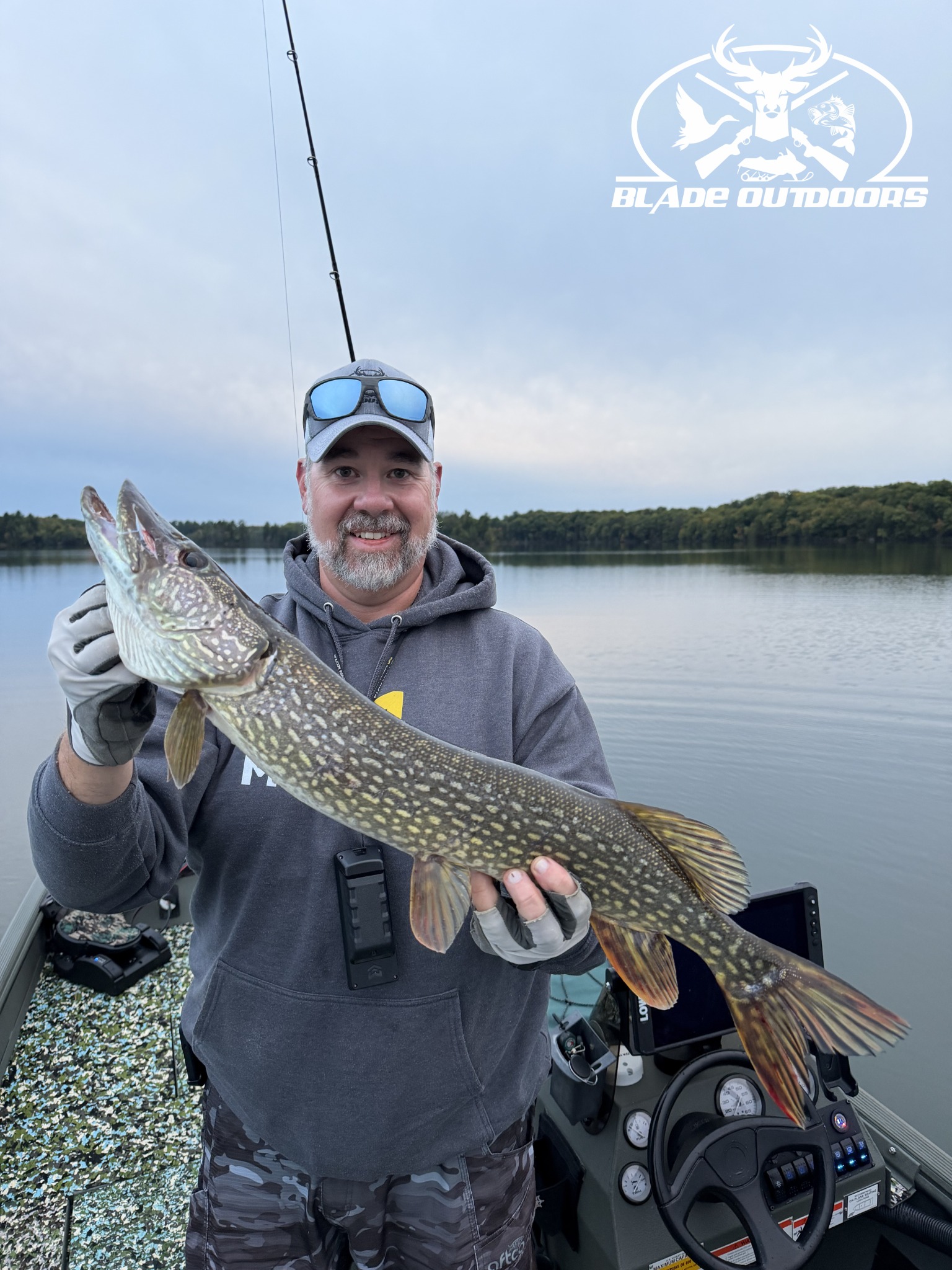
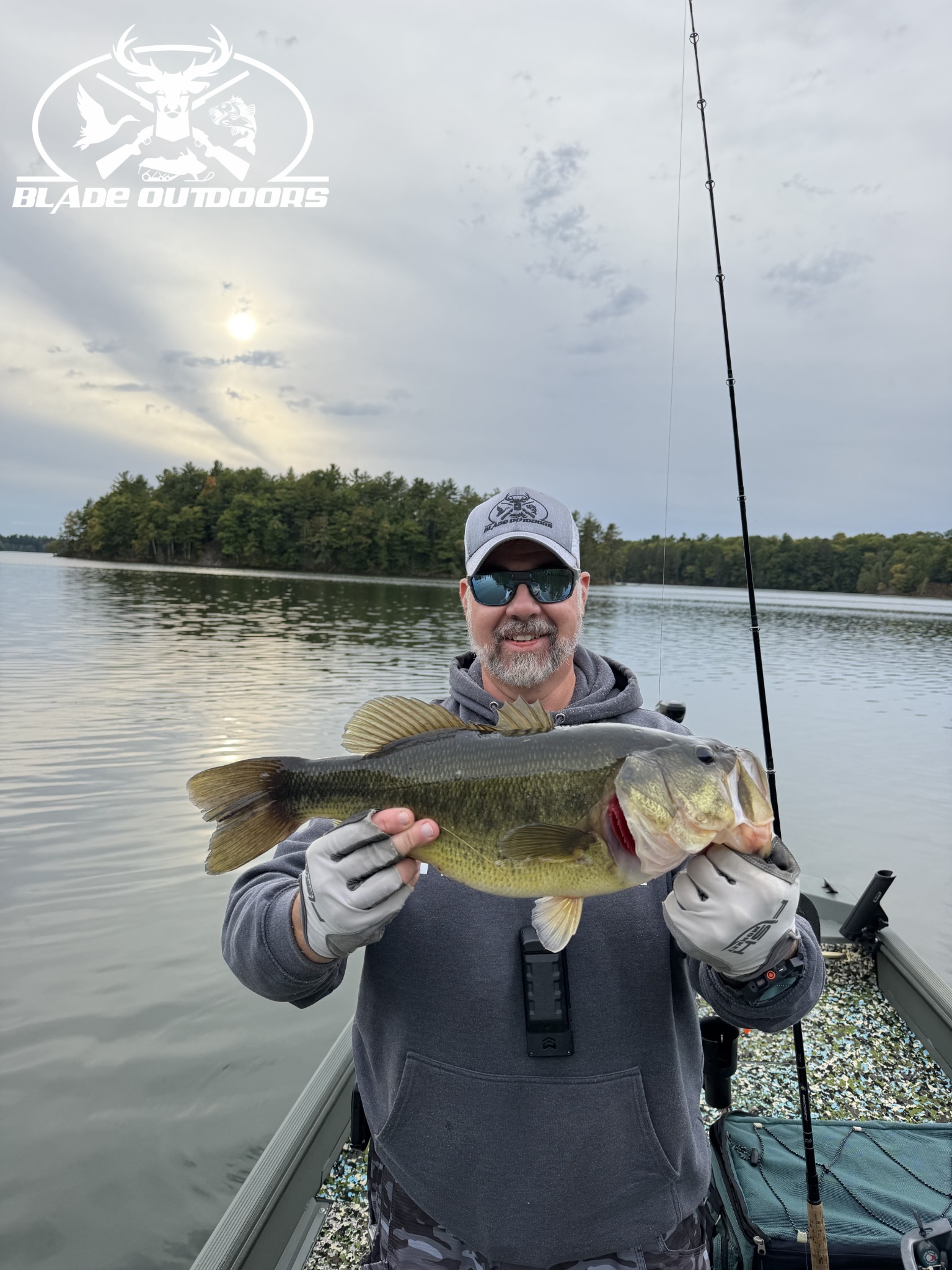
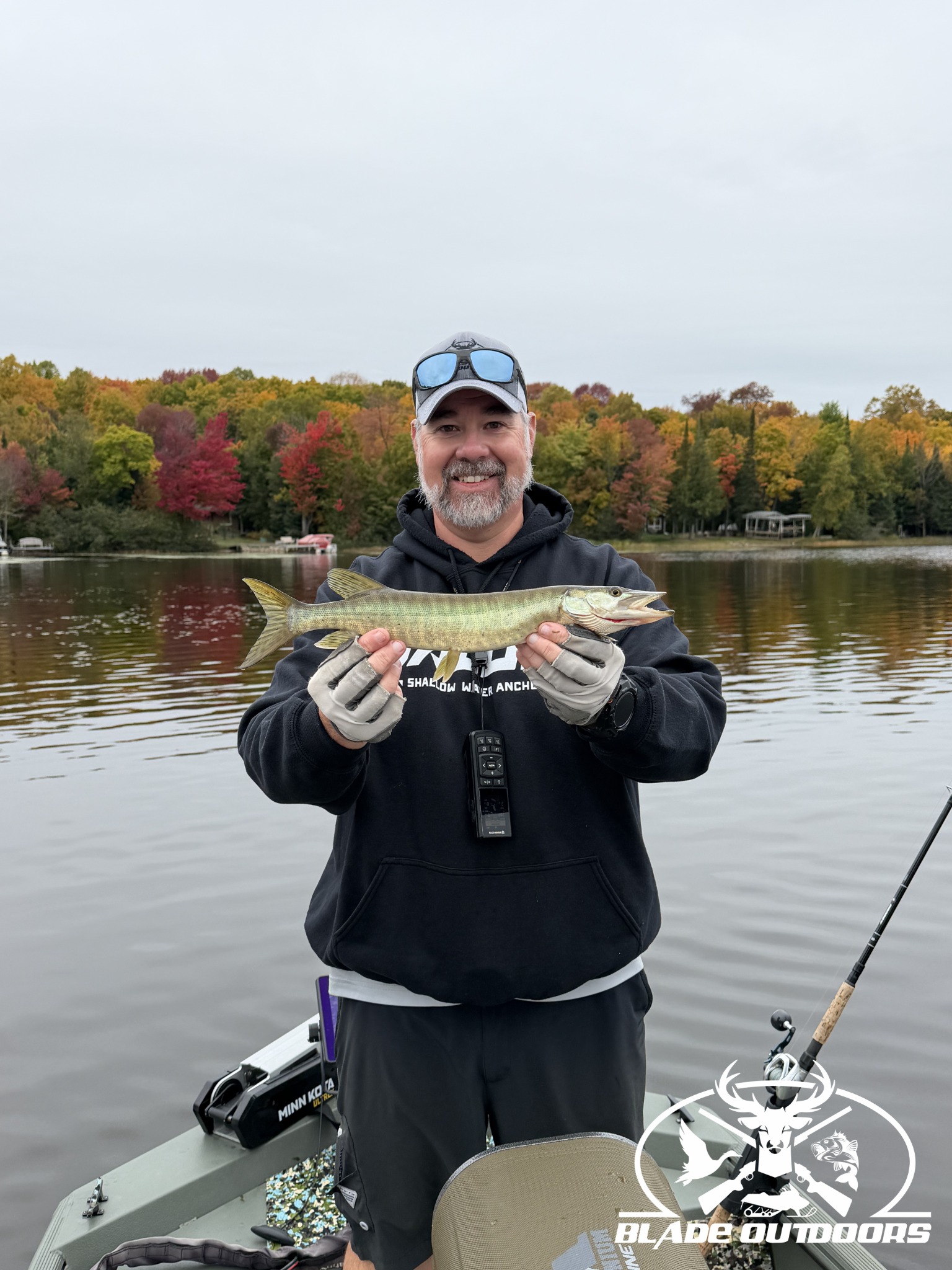
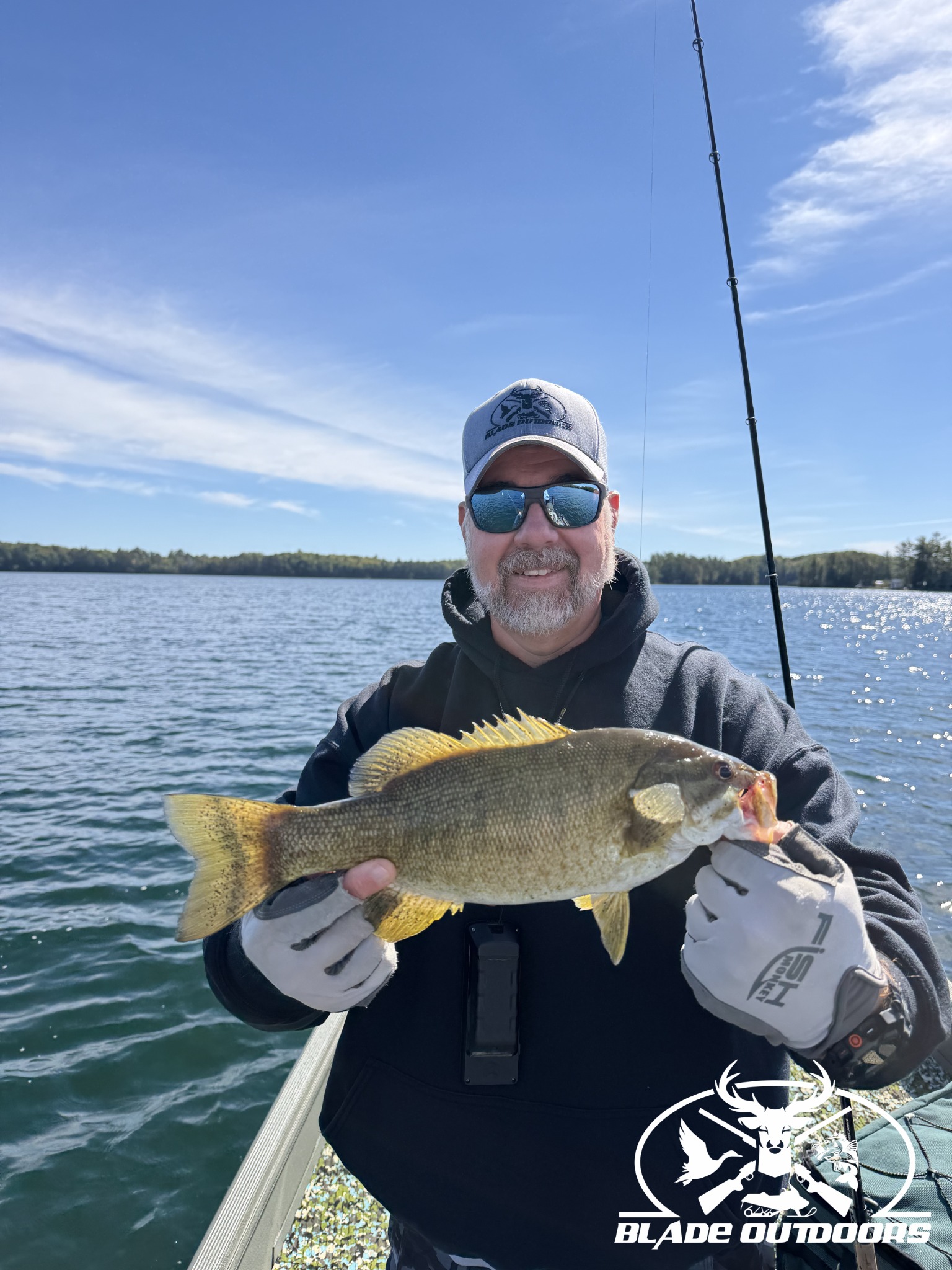
Another Northwoods musky trip is in the books. We landed a 30-inch northern pike, a 5-pound largemouth bass, a smallmouth and one musky barely big enough to make the board. Most fish seemed to have their feedbags on—but the musky made us earn every follow and bite.
Turnover changed the lake-by-lake pattern
Water temperatures were holding in the low 60s, but the six lakes were not moving through fall at the same pace. Smaller lakes under 500 acres had already turned over as of this report. The larger lakes were still holding some healthy green cabbage, which kept a shallow weed pattern alive in select areas.
That difference mattered. A presentation and location that moved fish on one lake could go quiet on the next. Instead of forcing one pattern everywhere, we had to read the water, check weed health and adjust to each lake’s stage of turnover.
Deep structure and green cabbage both held fish
We contacted musky in more than one zone. Deep ledges and rocky points produced follows out over deeper water, while shallow, healthy green cabbage produced both bites and follows where it remained. The fish were scattered enough that neither shallow nor deep water could be ignored.
The best approach was to stay mobile and treat each contact as information. When a fish showed itself, we worked similar structure and cover instead of assuming the entire lake was following the same pattern.
Smaller presentations moved the most musky
Many of our bites and follows came on smaller presentations, including a Grim Reaper 1-ounce spinnerbait, bucktails and Buchertails. The compact profiles worked cleanly around the remaining cabbage and gave scattered fish a manageable target during an inconsistent bite.
Downsizing was not a magic answer—the musky still made us work—but it generated enough action to become the trip’s most repeatable presentation choice.
The Northwoods changed color around us
We were lucky enough to watch the fall colors change right before our eyes. The shoreline went from mostly green to nearly full color over the four-day trip. The musky fishing was tougher than we hoped, but the changing conditions, mixed bag of fish and peak fall scenery made the time on the water worthwhile.